/icon_mouse_scroll_down.png "scroll down")
PENNE
PASTA
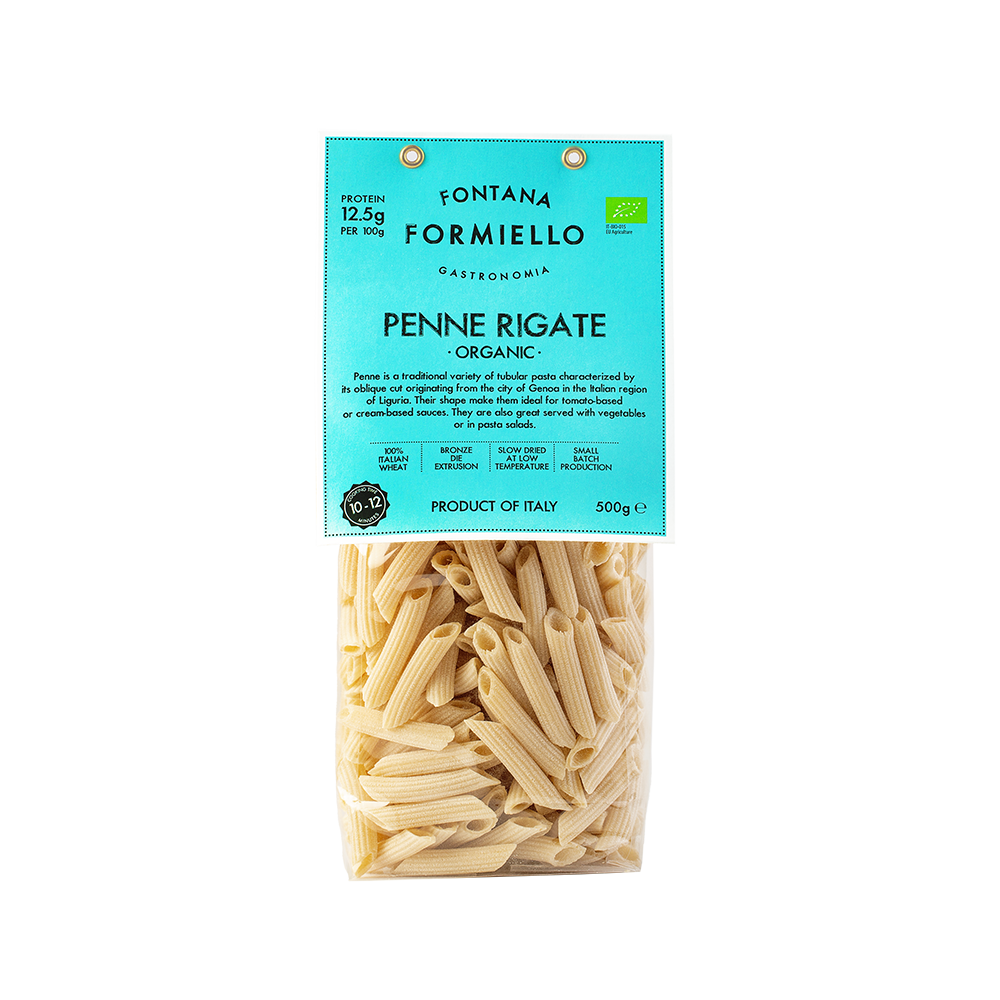
Penne Rigate is a regional pasta variety from Genoa, on the Ligurian coast in north-west Italy.
Its name comes from the Italian word penna, meaning “quill”, as the shape recalls the nib of a fountain pen. This pasta dates back to 1865, when Giovanni Battista Capurro, a pasta maker from Genoa, patented a machine capable of cutting pasta diagonally into uniform lengths.
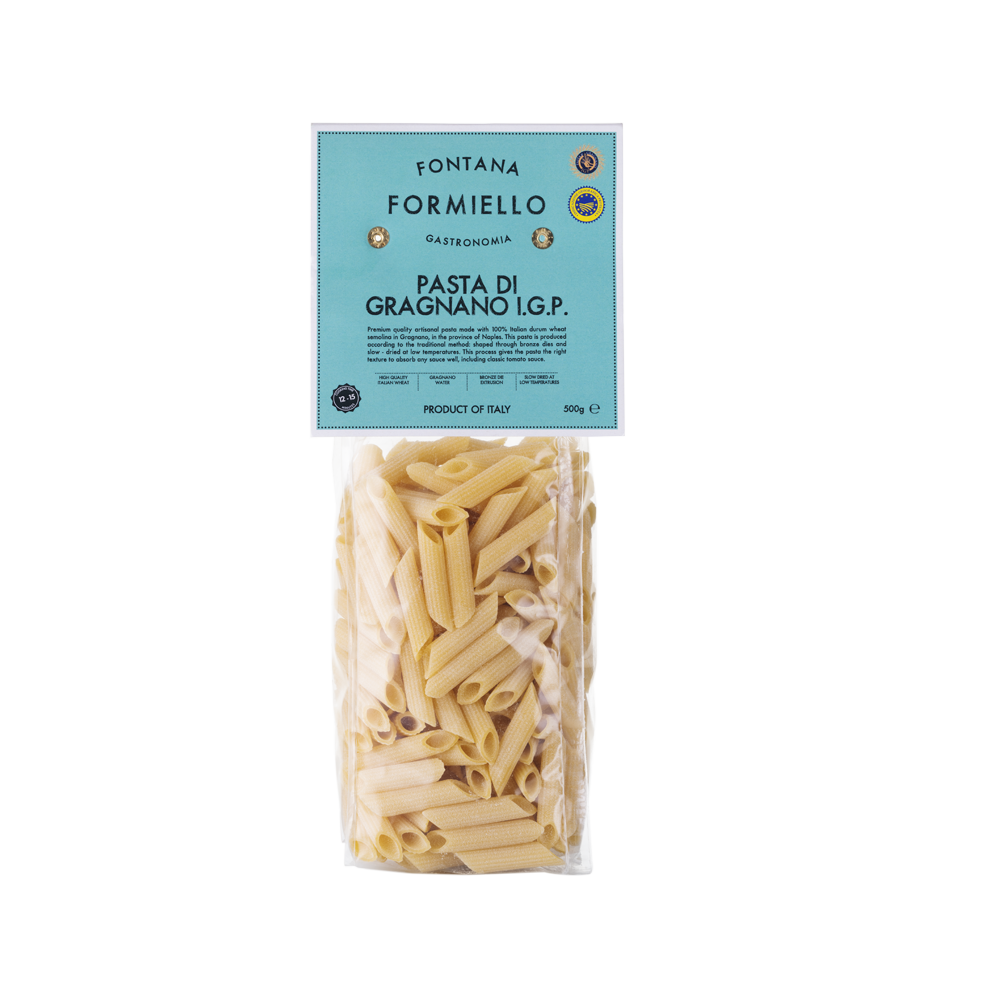
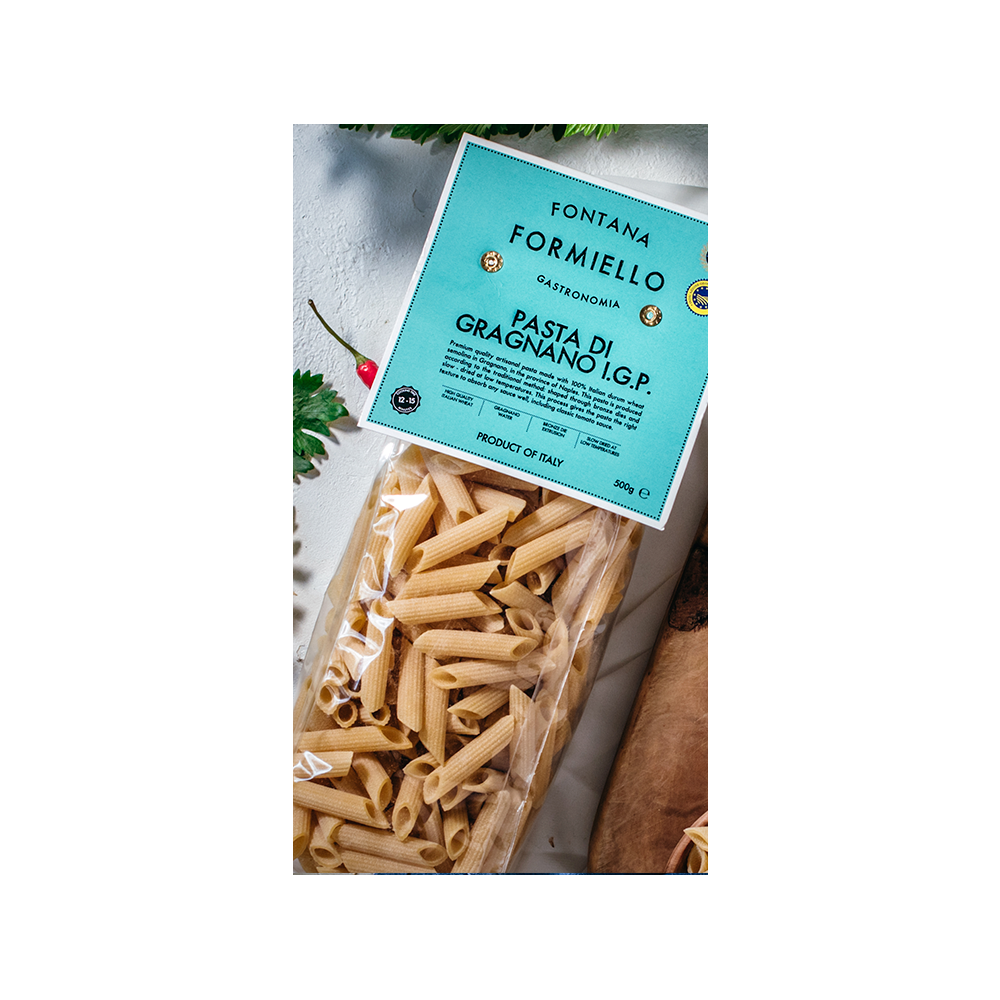
Made with 100% Italian organic durum wheat, Fontana FORMIELLO Penne Rigate is produced in small batches in the Apennine mountains, bronze-die extruded and slowly dried at natural ambient temperatures, without artificial heat.
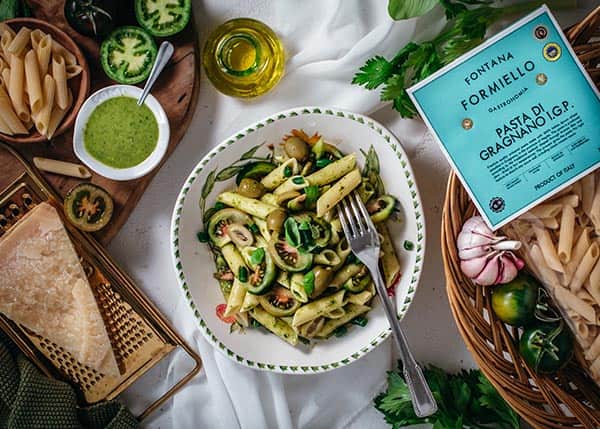
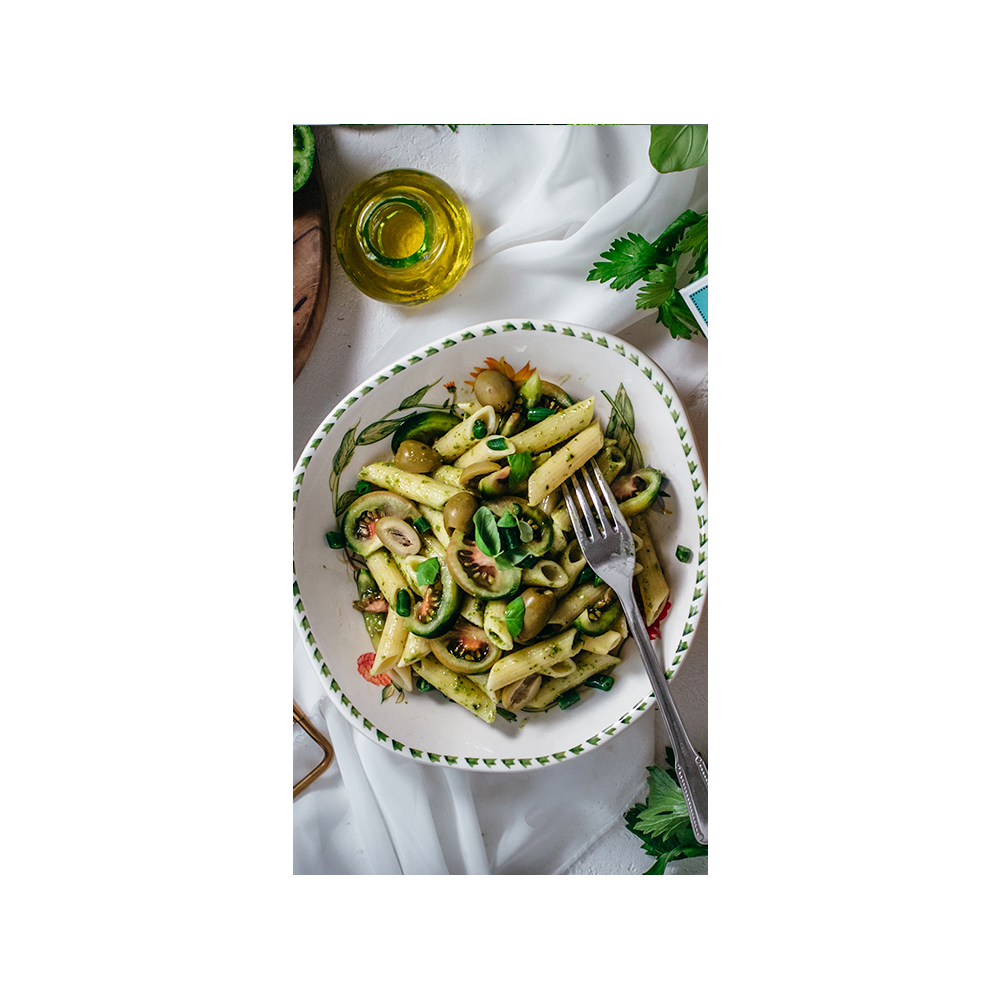
The resulting porous texture makes it ideal for tomato-based or cream-based sauces, as well as vegetable dishes and pasta salads.
SIZE: 500 g Net Wt
GTIN-13: 5060323905395
GTIN-14: 15060323905392

INGREDIENTS
Italian durum wheat semolina, water. *Organic ingredient.
ALLERGENS
Contains Wheat
FREE FROM
Celery, Crustaceans, Eggs, Fish, Lupin, Dairy, Molluscs, Mustard, Peanuts, Sesame, Soy, Sulphites, Nuts
NUTRITION CLAIMS
Source of Protein, Low Fat, Sugar Free, Low Salt, No Added Sugars, No Added Salt.
CERTIFICATIONS
Organic, 100% Italian Wheat
| Nutritional Information | 100 g | 1 portion / 80 g |
|---|---|---|
| Energy | 358 kcal 1,523 kJ | 286 kcal 1,218 kJ |
| Fat of which saturates | 0.5 g 0.1 g | 0.4 g 0.1 g |
| Carbohydrate of which sugars * | 76.5 g 0.4 g | 61.2 g 0.3 g |
| Fibre | 3.2 g | 2.6 g |
| Protein | 12.5 g | 10.0 g |
| Salt | 0.10 g | 0.08 g |
| Sodium | 39 mg | 31 mg |
*Contains naturally occurring sugars
Vegan, Vegetarian, Organic
PREPARATION
Pour pasta into salted boiling water (1l water for 100g of pasta). Stir several times and let boil. When cooked drain and season to taste.
COOKING TIPS
- Perfectly cooked pasta is al dente, an Italian term meaning “to the tooth.” This is when pasta is cooked through, yet still firm enough to offer some resistance to your bite.
- It’s important to use a pot large enough to hold at least 1l of water for each 100g of pasta. A common mistake is to use too small a pot or not enough water, which results in sticky pasta.
- Season the cooking water generously with salt (10g for each litre) as soon as it comes to a boil, then add the pasta when the water returns to a boil. The pasta will not be too salty but will be properly seasoned.
- Do not add oil to the pasta water.
- Stir occasionally to make sure that the pasta doesn’t stick together. Do not cover the pot again.
- Before draining the pasta, save some of the cooking water to add to the sauce. This adds extra starch to the sauce, emulsifying it, and helping it to cling much better to the pasta.
- Drain pasta 1 or 2 minutes before the indicated cooking time and finish cooking in the pan with the sauce.
- Use a colander to drain the pasta. Do not rinse after draining, this washes away the flavourful starches that will help sauces cling to it later.
COOKING IDEAS
Their shape make them ideal for tomato-based or cream-based sauces. They are also great served with vegetables or in pasta salads.
COOKING TIME
10-12 minutes
SERVINGS
About 6 portions (80g per portion)
STORAGE
Store in a cool dark place. Once opened, store barley in a tightly sealed container.
| Bag | Polypropylene (5 PP) | Recyclable | Plastic |
| Head Card | Paperboard (23 PBD) | Recyclable | Paper |
| Case | Cardboard (20 PAP) | Recyclable | Paper |
| Packaging to Product Weight Ratio | 15% |
| Recyclable Content | 100% |
| Plastic Content | 1.9% |
Our pasta is packed in transparent plastic bags with paperboard head card. We are planning to introduce paper packaging or similar in the near future and phase out the current plastic packaging.